
Access the full ToR here: https://drive.google.com/file/d/13FVIfMUAmJZofz1jblMTEg7QeDX95ip9/view?usp=drive_link
Action
for Children in Conflict (AfCiC) is seeking to engage an independent consultant
or consultancy firm to undertake an endline evaluation of the Wezesha Wasichana
Project implemented in Laikipia North, Kenya.
The
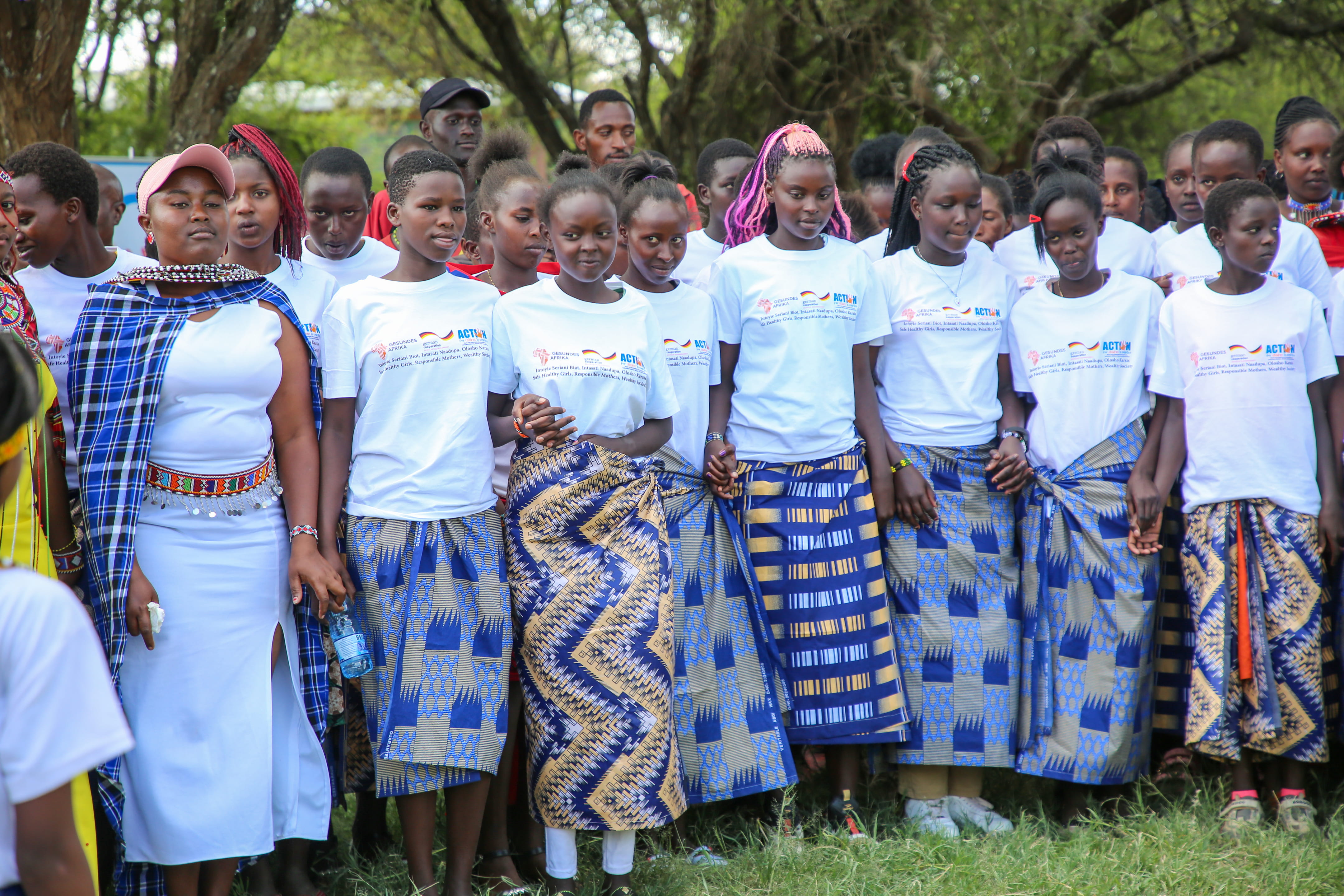
Wezesha Wasichana Project seeks to contribute to the reduction of Female
Genital Mutilation/Cutting (FGM/C), child marriage, adolescent pregnancy and
Gender-Based Violence (GBV), while strengthening the protection, participation
and empowerment of girls.
The
project has implemented several interventions, including school health clubs,
intergenerational dialogues, Alternative Rites of Passage (ARP), rescue and
referral services, and strengthening of child protection working groups. It has
also supported capacity building for teachers, community leaders and other
stakeholders who influence decisions affecting girls' rights and wellbeing.
As
the project approaches completion, AfCiC intends to commission an independent
endline evaluation to assess its performance, achievements, outcomes and
sustainability. The evaluation will compare endline findings against baseline
data, where indicators and measurement approaches are comparable, to establish
the extent of change achieved during the project implementation period.
The
findings will inform AfCiC, its partners and relevant stakeholders on programme
effectiveness, lessons learnt, remaining protection gaps and recommendations
for future programming and advocacy initiatives.
2.1 General Objective
To
assess the effectiveness, contribution to observed changes and sustainability
of the Wezesha Wasichana Project by examining changes in knowledge, attitudes,
practices, behaviours and institutional capacity from baseline to endline.
2.2 Specific Objectives
The
evaluation will seek to:
1.
Measure changes in knowledge,
attitudes and practices:
Compare baseline and endline findings on FGM/C, child marriage, adolescent
pregnancy, GBV and related child protection concerns.
2.
Assess the effectiveness of key
interventions:
Examine how school health clubs, intergenerational dialogues and Alternative
Rites of Passage have contributed to girls' empowerment, agency, social norm
change and behaviour change.
3.
Evaluate protection and referral
mechanisms:
Assess the functionality and effectiveness of child protection working groups,
rescue and referral pathways, and coordination among relevant service
providers.
4.
Assess stakeholder capacity: Examine changes in the knowledge,
skills and capacity of teachers, community leaders, local administrators,
community health promoters and other relevant stakeholders in protecting girls.
5.
Examine the project's contribution
to prevention:
Assess changes in community acceptance of harmful practices and review
available evidence on prevention efforts and reported cases.
6.
Assess sustainability: Examine local ownership,
institutional capacity, functionality of established structures and the
likelihood of continued implementation of project-supported interventions
beyond the project period.
7.
Document lessons and good
practices: Identify
successful approaches, implementation challenges and practical recommendations
for strengthening FGM/C abandonment, girls' empowerment and child protection
programming.
The
evaluation will be guided by the following questions:
3.1 Relevance, Reach and Inclusion
·
To
what extent did project interventions address the needs and priorities of girls
at greatest risk?
·
Which
groups of girls were reached or potentially excluded, including out-of-school
girls, girls with disabilities and those in hard-to-reach locations?
·
How
effective were the project's targeting and participation criteria?
3.2 Effectiveness and Girls'
Empowerment
·
What
changes have occurred in knowledge, attitudes, perceived social expectations
and reported practices relating to FGM/C, child marriage, adolescent pregnancy
and GBV?
· To
what extent have project activities strengthened girls' confidence,
participation in decision-making and ability to identify and seek support for
protection concerns?
·
Which
interventions contributed most significantly to observed changes?
·
Were
there any unintended outcomes or implementation barriers?
3.3 Protection, Capacity and
Coordination
·
Are
girls and caregivers aware of available protection services and able to access
support safely?
·
How
effective, timely and accessible are existing rescue, referral and follow-up
mechanisms?
·
To
what extent have schools, child protection working groups, local authorities,
health facilities and other service providers improved coordination?
·
How
effectively are trained stakeholders applying their knowledge and skills?
3.4 Contribution and Monitoring
Quality
·
To
what extent have project indicators changed from baseline and progressed
towards the intended targets?
·
What
evidence supports the project's contribution to observed changes?
·
How
reliable and comprehensive are the project's monitoring records, indicator
definitions and reporting systems?
3.5 Efficiency
·
Were
project activities implemented within the planned timelines?
·
Were
available financial, human and material resources utilised efficiently in
relation to programme reach and quality, where relevant data are available?
3.6 Participation and Accountability
·
To
what extent did girls and community members participate in project planning,
implementation and decision-making?
·
Were
feedback and complaints mechanisms accessible, safe and understood by
beneficiaries?
·
How
effectively did AfCiC respond to feedback received?
3.7 Sustainability and Learning
·
Which
interventions, school clubs, community structures and referral mechanisms are
likely to continue beyond the project period?
·
What
local resources, leadership and institutional commitments are available to sustain
the gains?
·
What
lessons should inform future programming?
The
evaluation will cover the entire project implementation period, from baseline
to project close, and will focus on communities, schools and other
implementation sites where the Wezesha Wasichana Project was implemented in
Laikipia North.
The
consultant will be expected to:
1.
Review
relevant project documentation, including the project proposal, theory of
change, results framework, baseline report, monitoring and evaluation tools,
progress reports, training records, attendance registers, working-group records,
aggregated referral data, feedback records and relevant expenditure summaries.
2.
Assess
the implementation and performance of the project's key interventions.
3.
Engage
relevant project stakeholders, including:
o
Adolescent
girls, both in and out of school.
o
Parents
and caregivers.
o
Teachers
and school administrators.
o
Community
and faith leaders.
o
Community
health promoters.
o
Gender
defenders and child protection actors.
o
Local
administrators and government representatives.
o
Child
protection working groups.
o
Children's
Services Officers and other relevant service providers.
o
AfCiC
programme staff and project management.
4.
Where
feasible and safe, include eligible community members who did not directly
participate in project activities to provide additional perspectives on
community-level changes.
5.
Assess
the extent to which project interventions have contributed to the intended
outcomes and identify remaining gaps and opportunities for improvement.
The
final scope, implementation sites, evaluation period and priority respondent
groups will be confirmed with AfCiC during the inception phase.
The
consultant is expected to propose a robust, participatory and mixed-methods
evaluation approach that combines quantitative and qualitative data collection
and analysis.
The
proposed methodology should include, but not be limited to, the following:
5.1 Evaluation Design and Baseline
Comparability
The
evaluation should use a mixed-methods approach to assess changes in project
outcomes and provide an understanding of the factors contributing to those
changes.
The
consultant will:
·
Map
priority indicators against their baseline values, targets, data sources and
definitions.
·
Ensure
consistency between baseline and endline measurement approaches wherever
possible.
·
Compare
indicators using similar questions, response options, recall periods,
denominators and geographic coverage.
·
Document
any differences in measurement approaches and clearly distinguish comparable
indicators from findings that can only be described at endline.
5.2 Sampling and Data Collection
The
consultant will propose and justify an appropriate sampling strategy, including
sample size, sampling frame, respondent selection and non-response management.
The
approach should:
·
Use
probability sampling where an appropriate sampling frame exists.
·
Ensure
representation of relevant age groups, locations, schooling status and
disability groups, where feasible and safe.
·
Include
both quantitative surveys and qualitative approaches such as Key Informant
Interviews (KIIs), Focus Group Discussions (FGDs) and stakeholder
consultations.
·
Use
appropriately trained field researchers and age-appropriate data collection
tools.
·
Pilot
and refine data collection instruments before full implementation.
·
Ensure
interviews and surveys are conducted in safe, private and accessible settings.
5.3 Data Analysis and
Interpretation
The
consultant will analyse quantitative and qualitative data to establish the
extent of change and explain the factors influencing project outcomes.
The
analysis should:
·
Present
baseline, endline and target values for comparable indicators.
·
Calculate
percentage-point changes where applicable.
·
Provide
appropriate statistical analysis and confidence intervals where supported by
the sampling design.
·
Disaggregate
findings by age, sex, disability, schooling status, geographical location and
level of project exposure, where relevant, feasible and safe.
·
Triangulate
quantitative findings with qualitative and administrative evidence.
·
Examine
alternative explanations for observed changes and clearly state the limitations
of attributing outcomes to the project.
·
Distinguish
reported cases and referral trends from actual prevalence, taking into
consideration possible underreporting and changes in reporting access.
5.4 Quality Assurance
The
consultant will be responsible for ensuring the quality and reliability of the
evaluation process through:
·
Adequate
training and supervision of data collection teams.
·
Daily
checks for data completeness, accuracy and consistency.
·
Documentation
of missing data, fieldwork deviations and limitations.
·
Secure
storage and management of collected information.
·
Maintenance
of reproducible analysis files.
·
Presentation
and validation of preliminary findings with AfCiC and selected stakeholders
using anonymised information.
Given
the sensitive nature of the evaluation and its focus on children and adolescent
girls, the consultant must demonstrate strong safeguarding, ethical research
and data protection practices throughout the assignment.
The
consultant will be required to:
1.
Agree
on a safeguarding and disclosure management protocol with AfCiC's safeguarding
focal person before commencing fieldwork.
2.
Obtain
all applicable ethical and administrative approvals before data collection
begins.
3.
Ensure
informed adult consent and age-appropriate assent and parent or guardian
consent for minors, in accordance with the approved ethical protocol and
applicable requirements.
4.
Explain
the purpose of the evaluation, voluntary participation, the right to withdraw
or skip questions, and the limits of confidentiality to all respondents.
5.
Ensure
that field researchers are adequately trained in child safeguarding,
confidentiality, informed consent and survivor-centred approaches.
6.
Use
safe, private and age-appropriate data collection methods. Group discussions
should focus on general community norms and available services rather than
soliciting personal accounts of harm.
7.
Ensure
that any individual questions concerning lived experiences of abuse or harm are
covered by specific ethical approval and an appropriate safety protocol.
8.
Verify
referral contacts and escalation procedures and ensure that disclosures and
safeguarding concerns are handled through agreed child protection and
survivor-centred referral pathways.
9.
Collect
only essential information and ensure that consent and contact information are
stored separately from research responses.
10.
Protect
collected information through restricted access, encryption, secure transfer
and appropriate data retention and deletion procedures.
11.
Ensure
that reports, presentations and datasets do not expose the identities of
children, survivors or other vulnerable respondents.
The
consultant must comply with the Kenya Data Protection Act, 2019, applicable
child protection legislation and relevant ethical research standards.
The
assignment is expected to take approximately 30 working days, including 10 working days
dedicated to training, piloting and fieldwork in Laikipia North.
The
specific calendar dates, review periods and approval timelines will be agreed
upon between AfCiC and the selected consultant at contracting. Fieldwork will
commence only after approval of the inception package and receipt of all
applicable approvals.
The
expected deliverables are as follows:
|
Phase |
Working Days |
Expected Deliverables |
|
Inception |
5 |
Inception
report containing the evaluation matrix, baseline indicator mapping, sampling
and analysis plan, draft data collection tools, fieldwork schedule and
safeguarding protocol. |
|
Fieldwork |
10 |
Training
and pilot summary, final data collection tools, and fieldwork completion
report indicating respondent coverage and any deviations. |
|
Analysis
and Draft Report |
7 |
Draft
evaluation report, baseline-to-endline indicator comparison table, key
findings and actionable recommendations. |
|
Validation
and Revision |
4 |
Stakeholder
validation presentation, documented feedback and a revised report addressing
the feedback received. |
|
Final
Submission |
4 |
Final
evaluation report, presentation, de-identified dataset, codebook, analysis
files and final data collection tools. |
|
Total |
30 |
All
deliverables must be submitted in editable electronic formats. The final report
should be submitted in Microsoft Word and PDF formats.
The
consultant will report directly to the AfCiC Director for Programmes and
Operations, who will provide overall oversight and coordinate access to
relevant project information, implementation sites and stakeholders.
The
Project Manager and relevant programme staff will support the consultant in
accessing project records, verifying monitoring data and coordinating
fieldwork.
AfCiC's
safeguarding focal person will provide guidance on safeguarding protocols,
ethical considerations and referral procedures.
The
consultant will retain responsibility for the independence, objectivity,
quality and integrity of the evaluation findings, conclusions and
recommendations.
The
contract will specify the assignment dates, payment milestones, fieldwork
logistics, confidentiality requirements, data ownership and other contractual
obligations.
Interested
and qualified individual consultants or consultancy firms are invited to submit
their applications for consideration.
Applicants
should submit the following documents:
1.
Technical Proposal outlining their understanding of
the assignment, proposed evaluation methodology, sampling strategy, data
collection and analysis approaches, quality assurance measures and proposed
work plan.
2.
Financial Proposal providing a detailed and itemised
budget for undertaking the assignment. The budget should include professional
fees, fieldwork expenses, transport, accommodation, data collection, analysis
and any applicable taxes.
3.
Updated Curriculum Vitae (CVs) of the lead consultant and
proposed team members, clearly highlighting relevant qualifications and
experience.
4.
Relevant Experience and References: Evidence of at least two similar
evaluation assignments undertaken, including brief descriptions of the
assignments and contact details of referees. Copies of relevant reports or
samples of previous evaluation work may also be included where available and
permitted.
5.
Academic and Professional
Certificates
demonstrating the qualifications and expertise of the proposed consultant or
team.
6.
Registration Documents: For consultancy firms, include a
valid certificate of registration or incorporation and relevant statutory
documentation.
7.
Availability Statement: Confirmation of availability to
undertake the assignment within the proposed timeframe.
Submission Procedure
All
application documents should be submitted in a sealed envelope clearly marked:
"CONSULTANCY FOR THE ENDLINE
EVALUATION OF THE WEZESHA WASICHANA PROJECT"
Applications
must be physically delivered and deposited at the Action for
Children in Conflict (AfCiC) offices in Thika, Kenya, on or before 10th October
2026 COB.
Late
submissions and applications that do not meet the stated requirements may not
be considered.
Only
shortlisted applicants will be contacted. AfCiC reserves the right to accept or
reject any application in accordance with its procurement procedures.
The
assignment is open to qualified individual consultants or consultancy firms
with demonstrated experience in programme evaluations, research and child
protection programming.
The
ideal consultant or team should possess the following qualifications and
competencies:
10.1 Academic Qualifications
·
A
postgraduate qualification in Monitoring and Evaluation, Social Sciences,
Development Studies, Gender Studies, Public Health, Research Methods or a
related field, or equivalent relevant professional experience.
·
Additional
training in child protection, gender and development, safeguarding or research
ethics will be an added advantage.
10.2 Relevant Professional
Experience
·
Demonstrated
experience in conducting independent endline evaluations, baseline studies,
impact assessments or similar research assignments.
·
Proven
experience in mixed-methods research, quantitative and qualitative data
collection, analysis and reporting.
·
Demonstrated
experience in baseline-to-endline comparisons and outcome measurement.
·
Relevant
experience in child protection, FGM/C prevention, child marriage, GBV
prevention, adolescent health or girls' empowerment programming.
·
Experience
working with communities, schools, government institutions and development
partners.
10.3 Technical Competencies
·
Strong
knowledge of evaluation methodologies, sampling techniques, data analysis and
interpretation.
·
Ability
to develop appropriate research tools and undertake rigorous data quality
assurance.
·
Demonstrated
understanding of safeguarding and ethical research involving children and other
vulnerable groups.
·
Familiarity
with data collection and analysis software and tools.
·
Excellent
report writing, presentation and communication skills.
10.4 Other Requirements
·
Ability
to work within the agreed assignment timeframe and conduct fieldwork in
Laikipia North.
·
Fluency
in English and ability to work in relevant local languages.
·
Strong
interpersonal, facilitation and stakeholder engagement skills.
·
Demonstrated
independence, objectivity and professional integrity.
·
Disclosure
of any actual or potential conflict of interest.
AfCiC looks forward to receiving applications from
qualified consultants and consultancy firms committed to advancing girls'
rights, protection and empowerment.
Whether you have skills to share, resources to offer, or simply a passion for helping others, your involvement is priceless. Together, we can amplify our impact, Your donation will enable us rescue more children from the streets, rehabilitate them at our Temporary Rescue Centre where they are provided basic needs and are finally reintegrated into the society. . Take the first step—fill out our volunteer form today! Let’s work together to create lasting change in our communities.


